
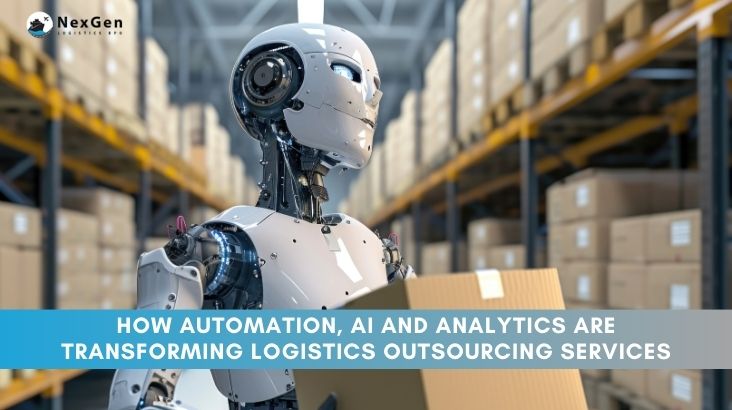
A new era is beginning in the transportation sector. In this era, automated and intelligent systems are changing how efficient, accurate, and flexible the sector is. More and more companies that want to grow without losing quality are hiring other businesses to do work for them, especially in areas where technology clearly helps. Predictive tools, AI-driven help, and automated systems are now used in modern workflows. In this situation, a lot of businesses use AI in logistics BPO services India to support their digital transformation initiatives and stay ahead of the competition.
The Rise of Intelligent Logistics Outsourcing
Why Technology Matters in Modern Supply Chains
Global supply networks must meet very short goals, deal with changing customer needs, and keep costs down. Old-fashioned ways of doing things by hand can’t keep up anymore. As businesses go beyond their local markets, logistics outsourcing lets companies hand off important tasks to partners with technology like automation, prediction systems, and AI.
The Shift From Manual Workflows to Smart Operations
Today, outsourcing partners are more than just companies that provide services; they are an essential part of an organization’s technology strategy. Businesses now want all of their digital tools to work together so that they can track things in real time and use digital screens. This is because they want to be able to make better decisions and make sure that humans don’t make mistakes.
Automation: The Backbone of Future-Ready Logistics
Improving Efficiency Through Advanced Automation Systems
Automation speeds up tasks like checking orders, planning routes, organizing shipments, and checking documents. These methods cut down on jobs that have to be done over and over again, which gives people more time to work on more important things. As automation becomes more common, businesses around the world are quickly starting to use automated logistics tools.
Streamlining Data Management With Automated Processes
The success of transportation depends on accurate data. When working with big files, automated systems can do the cleaning, analysis, and categorization all in an instant. Reduced response times, improved compliance, and uniform data quality are all benefits of automated logistics data processing outsourcing for businesses that depend on partner support.
Artificial Intelligence: Enhancing Predictive and Operational Capabilities
The Growing Influence of AI in Logistics Functions
AI is changing how forecasting, demand planning, delivery accuracy, and resource sharing are done. Its role in shipping, storage, and customer service continues to grow. In order to reduce business risks and increase performance visibility, many companies are now looking into AI in logistics.
How AI Supports Scalable Outsourcing Models
Outsourcing teams with AI can look at shipping exceptions, performance differences, and automatically suggest actions. BPO partners make total responsiveness much better by adding learning models to daily process cycles. As a result, logistics BPO relationships are worth even more, and they play a key role in the modernization of technology-enabled supply chains.
Analytics: Driving Data-Backed Decision Making
The Importance of Analytics in Logistics Transformation
Analytical insights help businesses figure out what they need to buy, plan for delays, make sure their fleet is being used properly, and find performance problems. These findings help run the business and let leaders make better decisions across the supply chain.
Turning Complex Data Into Actionable Insights
Advanced analysis tools turn big sets of data into useful information. Analytics logistics screens are used by outsourcing partners to keep an eye on KPIs, evaluate risks, and find areas for growth. These findings help speed up the timelines for operations and help with long-term planning for all supply channels.
Automation, AI, and Analytics Working Together
Creating a Connected and Predictive Operations Network
When AI, automation, and data work together as a single system, businesses get unmatched end-to-end clarity. Predictive models show possible problems, automation takes care of jobs that need to be done over and over, and analytics make sure that performance is always at its best.
Transforming Supply Chains Into Responsive Systems
Integrated technologies make customers happier, lower wait times, and improve accuracy. This combination helps businesses that are looking into supply chain automation. It lets them go from reacting to problems to making decisions ahead of time.
The Role of Technology-Driven Outsourcing Partners
How BPO Teams Strengthen Logistics Performance
Outsourcing teams that are trained in technology can help companies grow faster by bringing in their specific knowledge. Their systems handle paperwork, tracking orders, working with carriers, and customer questions with accuracy. When businesses work with tech-enabled companies, they can keep their operations running even when things go wrong and save money.
Future Outlook for Outsourced Logistics Operations
Smart technology, forecasting tools, and ongoing digital progress will all have an impact on the future of transportation. Partners in outsourcing already offer solutions that blend strategy, data, and automated processes. This helps ensure long-term flexibility.
Conclusion
Using data, AI, and automation is changing the way businesses handle transportation. Companies that use technology-driven hiring are more likely to be able to work faster, more accurately, and with more scalability. As digital transformation speeds up, businesses that work with service providers that are good at automated logistics data processing outsourcing will be able to stay ahead of the competition in the global market.

 NexGen Logistics BPO is a well-esteemed name in the global outsourcing market, employed with a dedicated bunch of employees who work on a 24*7 basis to deliver the finest results.